 blog
Urgent Care vs Primary Care for Illness: Which to Choose
Table of Contents
- Urgent Care vs Primary Care for Illness: Key Differences
- When to Go to Urgent Care for Illness
- What to Expect from a Primary Care Doctor Sick Visit
- Urgent Care for Flu Symptoms: What They Can and Cannot Do
- Cost, Insurance, and Billing Differences
- Urgent Care Follow-Up with Primary Care: Why It Matters
- Red Flags: When to Skip Both and Go to the ER
- Frequently Asked Questions
Last Updated: October 19, 2026
Urgent Care vs Primary Care for Illness: Key Differences
When you wake up with a fever or a stubborn cough, the urgent care vs primary care decision can feel harder than it should. The difference comes down to one question: is this a one-time problem or part of a longer health story? At Xcellcare Medical Practice, we help adults sort that out every week, and the answer usually shapes where you should go first.
Urgent care is short-term care for a non-life-threatening condition that needs attention now, often without an appointment. Primary care is ongoing care from a provider who knows your medical history, manages chronic conditions, and handles preventive care over time.
That distinction matters more than most people realize. Choosing the wrong setting can mean a higher bill, a repeat visit, or a gap in your records. Below, we break down when each option fits, what happens after the visit, and the red flags that mean you skip both and head to the emergency department.
A patient sitting in a bright, modern clinic waiting area, calmly reviewing a health form on a clipboard, with a receptionist visible at the front desk in the background
Care Setting | Best For | Appointment | Continuity | Typical Use |
|---|---|---|---|---|
Primary care | Ongoing and preventive care | Usually scheduled, same-day often available | High, one provider over time | Sick visits, chronic condition management, screenings |
Urgent care | Sudden, non-life-threatening illness or injury | Walk-in access | Low, records sent to your provider | Fever, minor infections, sprains, flu symptoms |
Emergency department | Life-threatening symptoms | Walk-in, triage by severity | Low, follow-up needed | Chest pain, stroke signs, severe bleeding |
When to Go to Urgent Care for Illness
Go to urgent care when an acute illness needs same-day attention but is not life-threatening.
Use this illness-by-illness guide to make the call. It reflects common patterns most practitioners follow, but it is not a substitute for medical advice.
Fever. A fever without a clear cause is a reasonable urgent care visit when it is high, persistent, or accompanied by other symptoms.
Sore throat. Most sore throats are viral and resolve in a few days.
Ear infection. Ear pain with fever, fluid drainage, or hearing muffling is a common urgent care visit, especially when it comes on quickly.
Urinary symptoms. Burning with urination, frequent urgency, or cloudy urine usually needs a urine test and possibly antibiotics, a good fit for urgent care when you cannot get a same-day primary care appointment.
Respiratory infections. A cough or cold that is worsening after a week, a cough with shortness of breath, or a suspected flu or COVID-19 case where you want rapid testing and antiviral guidance fits urgent care.
Sinus symptoms. Facial pressure, congestion, and headache lasting more than 10 days, or worsening after initial improvement, may warrant urgent care for evaluation and possible antibiotics. Chronic or recurrent sinus problems belong with primary care.
Urgent care centers handle a defined list of services well: rapid testing, basic lab services, imaging like X-rays, and prescriptions. What they cannot do is manage your diabetes, adjust your blood pressure medication, or track a chronic condition across months.
A common mistake is treating urgent care as a substitute for a primary care provider. It works for the occasional sudden illness. It falls apart as a long-term plan, because no single clinician is watching the whole picture.
What to Expect from a Primary Care Doctor Sick Visit
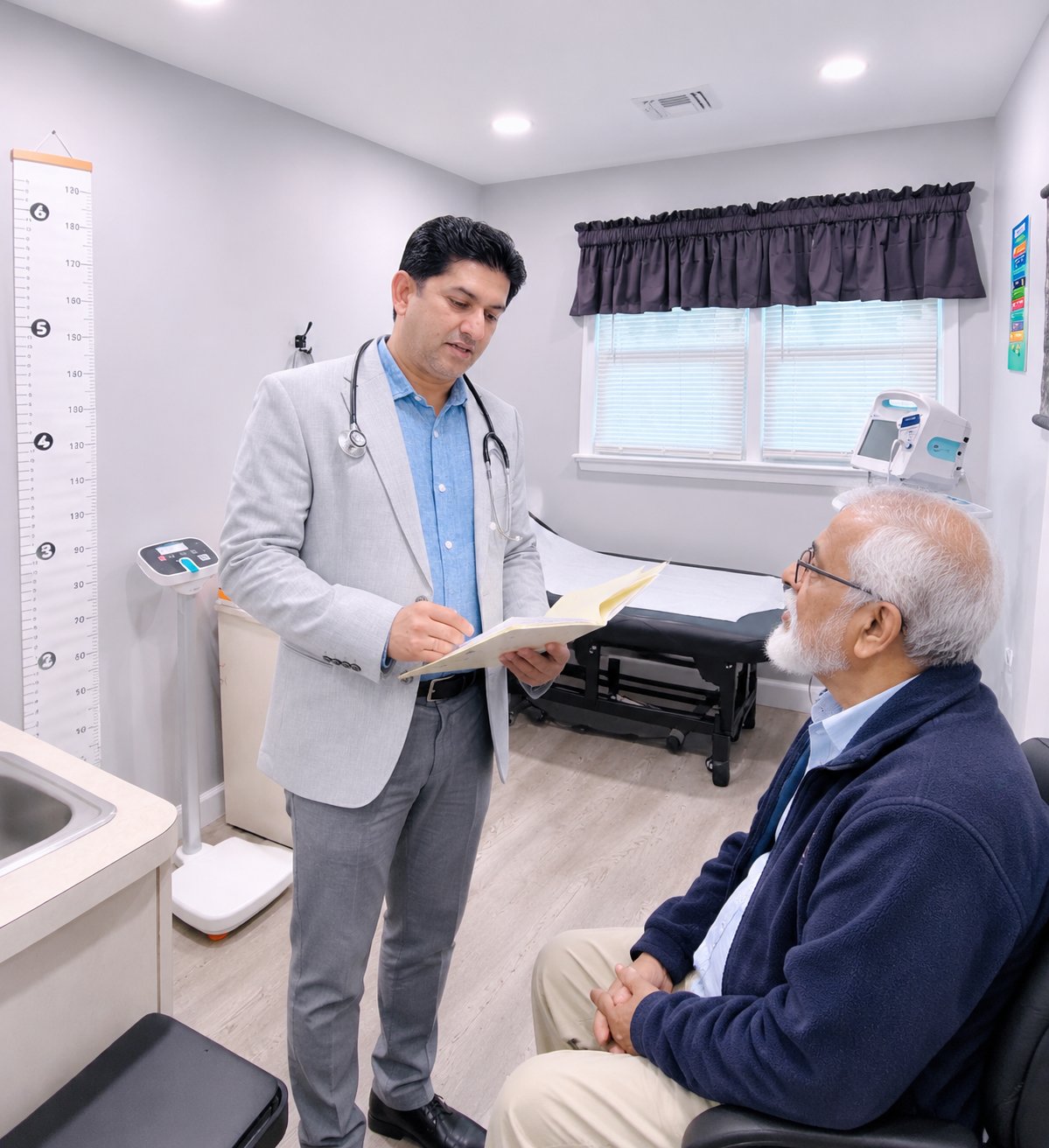
A primary care doctor sick visit is a scheduled appointment for an acute illness with a provider who already knows your medical history. That context changes the visit. Your provider can weigh your current symptoms against your medications, allergies, and chronic conditions in a way a walk-in clinic cannot.
Here is what a sick visit typically involves:
- A focused history of your symptoms and how long they have lasted
- A physical exam and vital signs
- On-site lab coordination or a blood draw when testing is needed
- A diagnosis and treatment plan, including prescriptions if appropriate
- A note in your record so future visits build on this one
The advantage is continuity of care. If a cold and flu episode lingers, your provider already has a baseline. If a fever turns out to be related to a chronic condition, they connect the dots.
We built our sick visit scheduling around same-day appointments and extended hours, Monday through Saturday, 9 AM to 9 PM, because illness rarely checks your calendar first. Patients tell us the difference they notice most is time: Dr. Khan is thorough and takes time to listen to all your concerns, rather than rushing you out the door.
Urgent Care for Flu Symptoms: What They Can and Cannot Do
Urgent care for flu symptoms is a reasonable choice when you need a rapid diagnosis, a prescription, or relief from a sudden illness and cannot get in to see your regular doctor. Most centers offer rapid flu testing, and some provide antiviral prescriptions when clinically appropriate.
What urgent care can do:
- Test for flu and other common respiratory illnesses
- Prescribe medication when the diagnosis supports it
- Provide guidance on rest, hydration, and symptom relief
- Rule out more serious conditions with basic imaging or labs
What urgent care generally cannot do:
- Manage complications tied to a chronic condition over time
- Coordinate follow-up care with your regular provider
- Adjust long-term medications or treatment plans
Here is the part most people miss: flu symptoms can overlap with conditions that need ongoing management, especially if you live with diabetes, hypertension, or a thyroid condition. A short-term visit addresses the acute illness. It does not address how that illness interacts with everything else.
Cost, Insurance, and Billing Differences
Cost is where the urgent care vs primary care comparison gets practical, and the honest answer is that it depends on your insurance coverage and the care setting. Emergency department visits generally carry the highest cost, urgent care sits in the middle, and primary care visits are often the lowest, though the gap varies by plan.
Three billing details catch people off guard:
- Network status. An urgent care center may bill as a facility or as a physician practice, and the two can be covered differently. A clinic that looks in-network on your plan's website may still send lab work to an out-of-network lab.
- Lab and imaging charges. Tests run during a visit may be billed separately by an outside lab or radiology group. Ask who reads the X-ray or runs the blood test before you agree to it.
- Follow-up visits. A single urgent care visit can turn into two or three trips if the issue needs monitoring. Each visit may trigger a separate copay or coinsurance charge.
For patients without insurance, self-pay pricing varies widely between providers. We do not publish a single figure because it depends on the services involved, so we recommend calling ahead and asking for the self-pay rate for the specific visit you need. The Centers for Medicare & Medicaid Services publishes consumer guidance on coverage and billing that helps you compare plans and understand what your policy covers.
If cost predictability matters to you, a primary care relationship is usually the better long-term value. Preventive care and chronic condition management catch problems earlier, when they are cheaper to treat.
Urgent Care Follow-Up with Primary Care: Why It Matters
Urgent care follow-up with primary care is what turns a one-off visit into a coherent care plan. After a walk-in visit, your primary care provider should receive the visit summary, test results, and any prescriptions so your record stays complete.
Why it matters in practice:
- Avoids duplicate testing. Your provider can see what was already done.
- Catches unresolved symptoms. If a cough or fever has not cleared, follow-up care identifies why.
- Connects the dots. An acute illness can reveal an underlying chronic condition worth monitoring.
- Keeps prescriptions coordinated. New medications get checked against what you already take.
Many patients treat an urgent care visit as the end of the story. It is usually the middle. A short follow-up appointment, whether in person or through virtual care, closes the gap between short-term treatment and ongoing care.
If you are coming from a walk-in clinic and want a provider who will pick up where that visit left off, our team at Xcellcare Medical Practice coordinates on-site lab results and reviews your full medical history so nothing gets lost between settings.
Red Flags: When to Skip Both and Go to the ER
Skip both urgent care and primary care when symptoms suggest a life-threatening condition. The emergency department is the only appropriate setting for certain red flags, and waiting for a clinic appointment wastes critical time.
Go to the ER for:
- Chest pain or pressure, especially with sweating or nausea
- Difficulty breathing or shortness of breath at rest
- Signs of stroke, such as sudden weakness, facial drooping, or slurred speech
- Severe bleeding that will not stop with pressure
- A head injury with confusion, vomiting, or loss of consciousness
- A high fever with a stiff neck or a rash that does not fade under pressure
The American College of Emergency Physicians maintains patient guidance on when emergency care is the right call. When in doubt, call 911. No urgent care visit is worth delaying emergency treatment for a life-threatening symptom.
For everything else, the choice narrows to urgent care or primary care. Sudden and minor points to urgent care. Recurring, chronic, or preventive points to primary care.
MedlinePlus health information from the National Library of Medicine is a useful, plain-language resource for understanding symptoms before you decide where to go.
The hardest part of getting sick is often deciding where to go while you already feel awful. A primary care relationship removes that guesswork, because you have a provider who knows your history and can see you quickly when illness hits. Xcellcare Medical Practice offers same-day appointments, extended hours Monday through Saturday, on-site lab coordination, and unhurried visits with Dr. Muhammad Afzal Khan, a board-certified internal medicine physician. Call now to schedule a sick visit or establish care, and stop deciding between urgent care vs primary care alone.
Frequently Asked Questions
When should I see my primary care doctor instead of going to urgent care?
See your primary care doctor for ongoing or chronic conditions, preventive care, and illnesses that are not urgent. A primary care doctor sick visit is best when you can get a same-day or next-day appointment, because they know your medical history and can adjust long-term treatment plans. If your symptoms are mild and you can wait for an appointment, primary care offers continuity of care that urgent care cannot match.
Can urgent care prescribe medication?
Yes, urgent care providers can prescribe medication for many acute illnesses, including antibiotics for infections and antivirals for the flu. However, they typically cannot prescribe or manage long-term medications for chronic conditions like diabetes or hypertension. If you need a refill or adjustment to an ongoing prescription, contact your primary care doctor. Always tell the urgent care provider about your current medications to avoid interactions.
How long is the wait at urgent care?
Wait times at urgent care vary by location and time of day, but many clinics see patients within 30 to 60 minutes. Walk-in access means you do not need an appointment, though you may face longer waits during peak hours or flu season. Some urgent care centers offer online check-in to reduce waiting. For non-life-threatening conditions, urgent care is generally faster than an emergency room visit.
Should I follow up with my primary care doctor after an urgent care visit?
Yes, urgent care follow-up with primary care is important for several reasons. Your primary care doctor should know about any new diagnosis, prescription, or lab result so they can update your medical history and coordinate ongoing care. Follow-up also helps if symptoms persist or if you need further testing. Request that the urgent care send records to your primary care provider, and schedule a visit if your condition does not improve as expected.